Limewash vs. Microcement: Which is Best for Your Singapore Home?
Jul 24, 2025
Quick answer
For feature walls and bedrooms in humid Singapore, limewash wins: it breathes, resists mould and gives a soft, cloudy matte look. For floors, bathrooms and kitchen counters, choose microcement: it is seamless, hard-wearing and waterproof once sealed.
At a glance · Singapore homes
Factor
Limewash
Microcement
Look
Soft, chalky matte with natural cloudy movement
Smooth, seamless and modern; matte to satin
Best surfaces
Interior and exterior walls, feature walls, ceilings
Floors, walls, bathrooms, counters, stairs
Humidity & mould
Breathable; naturally resists mould and bacteria
Waterproof when sealed; good for wet areas
Durability
Can wear or fade in high-contact spots; easy touch-ups
Very hard-wearing; reseal every few years
Cost
Usually the more affordable option
Usually costs more (materials and layered work)
Choose Limewash if
You want a calm, textured feature wall
The room is a bedroom, living room or nursery
You care about natural, breathable materials
Choose Microcement if
You want one seamless floor-to-wall look
It is a bathroom, kitchen or high-traffic floor
You want a surface that is wipe-clean and waterproof
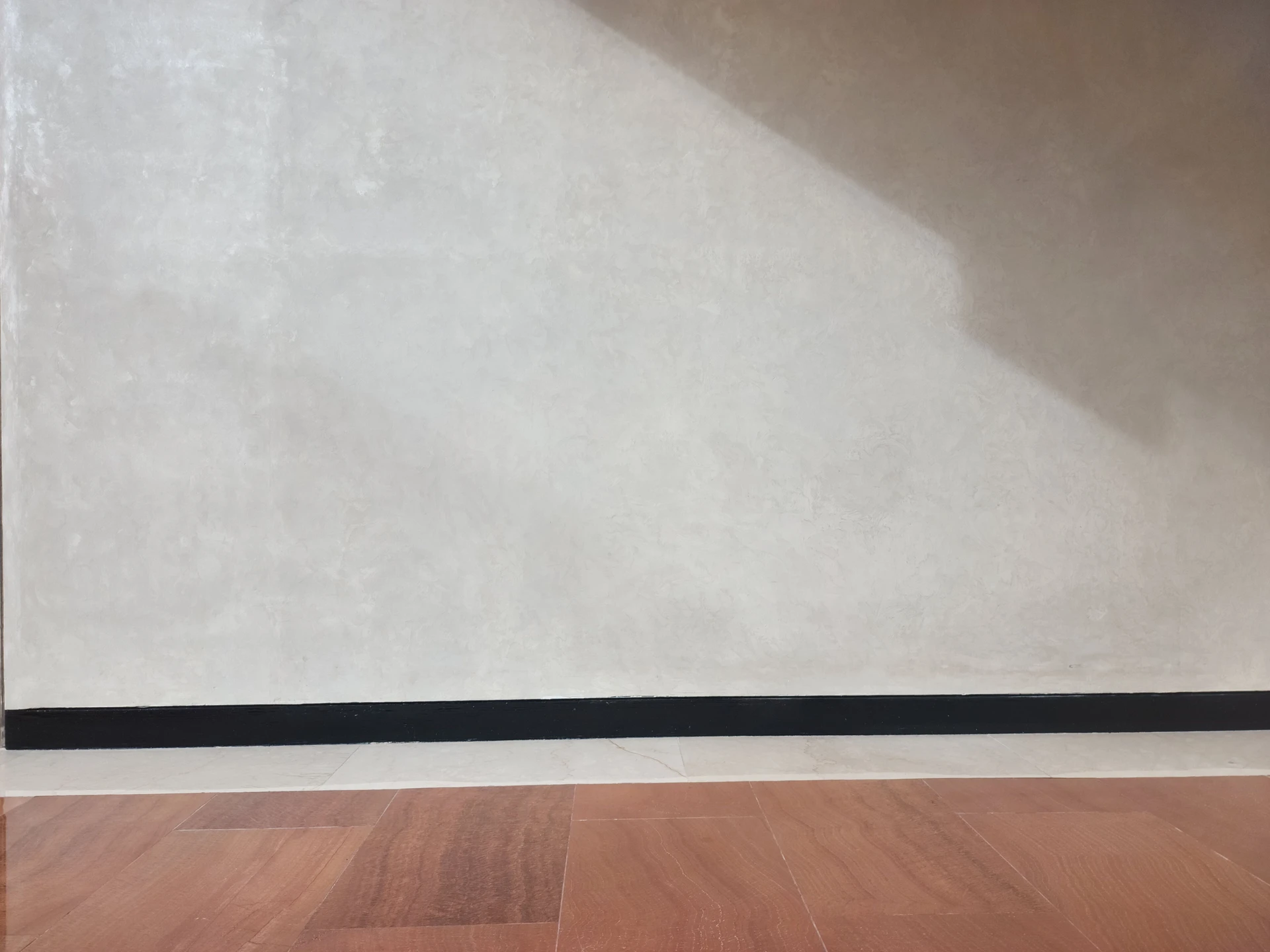
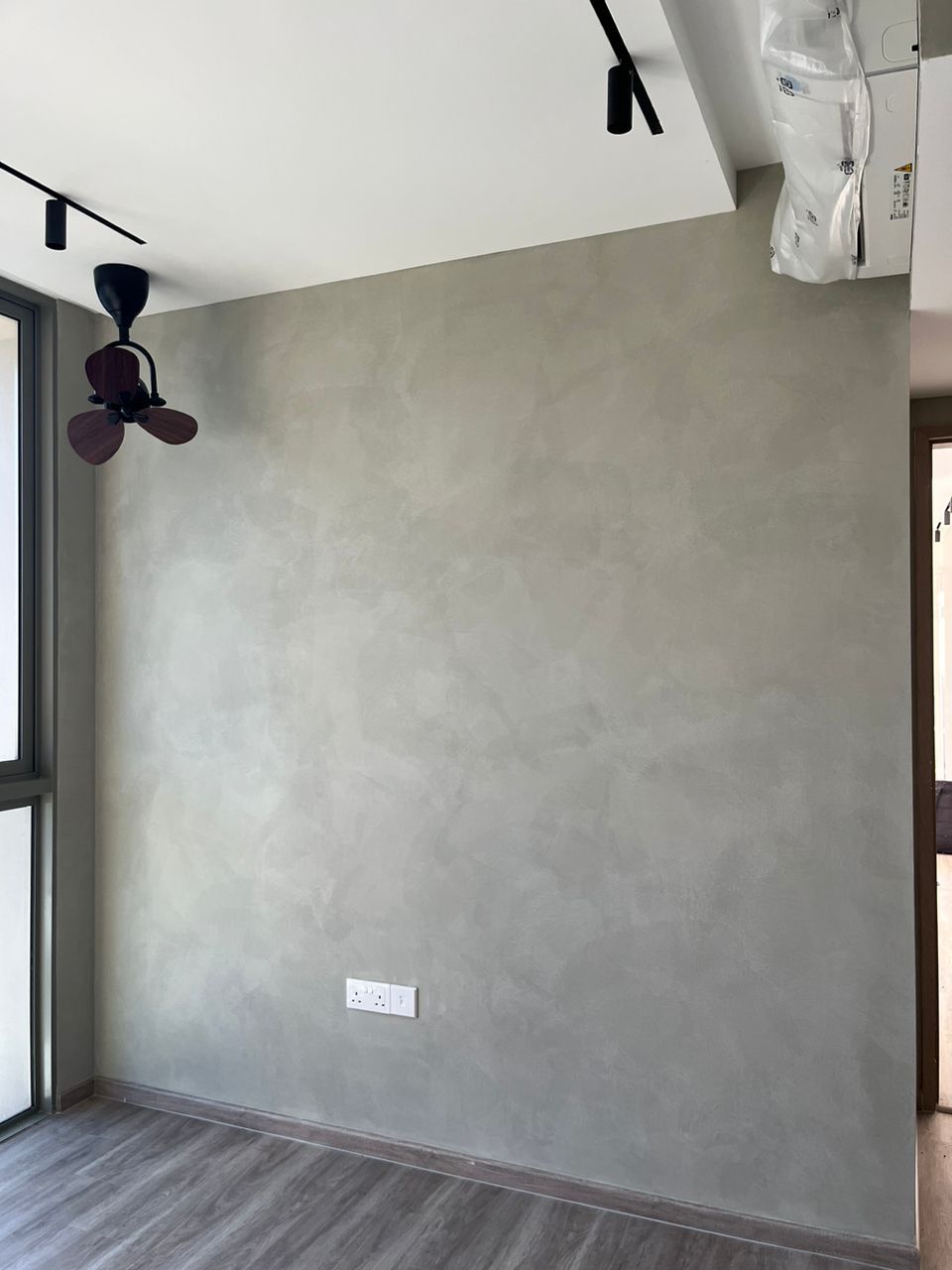
Raffles Soft LinenLimewash · CairnhillSuzuka VerosaLimewash · The Woodleigh MallSoft grey limewashLimewash · Tengah BTO
When it comes to finishing your walls or floors, the choices can be overwhelming. Two popular options in Singapore are limewash and microcement. Both have unique characteristics that can transform your space, but which one is the best choice for your home? Let's explore these two materials to help you make an informed decision.
Limewash is a natural paint made from crushed limestone and water. This eco-friendly option has been used for centuries and offers a soft, matte finish that adds texture and depth to surfaces. Limewash is breathable, allowing moisture to escape, which makes it ideal for humid climates like Singapore's. It is also known for its antibacterial and antifungal properties, making it a healthy choice for indoor spaces.
Applying limewash requires a bit more skill than traditional paint, as it involves multiple thin layers to achieve the desired look. However, its chalky appearance and natural color variations can create a stunning effect that complements both modern and traditional interiors.
5 room HDB Living Room with feature wall
Understanding Microcement
Microcement is a versatile, cement-based coating that is applied in thin layers to create a seamless surface. It can be used on floors, walls, and even countertops, providing a sleek and contemporary look. Unlike limewash, microcement offers a more uniform finish with a slightly glossy appearance, which can be customized with various colors and textures.
This material is highly durable and resistant to wear and tear, making it an excellent choice for high-traffic areas in your home. Additionally, microcement is waterproof, making it suitable for bathrooms and kitchens where moisture resistance is essential.
Comparing Aesthetics and Style
Limewash and microcement each offer distinct aesthetic benefits. Limewash is perfect for those who appreciate a rustic or vintage vibe, as its natural finish and subtle variations add character to any room. On the other hand, microcement appeals to those who prefer a minimalist or industrial style, thanks to its smooth, continuous surface.
Consider the overall aesthetic of your home when choosing between these two finishes. If you're aiming for a cozy, lived-in feel, limewash might be the way to go. Conversely, if you desire a clean, modern look, microcement could be the perfect fit.
Installation and Maintenance
Both limewash and microcement require professional application to achieve the best results. Limewash needs multiple coats and specific techniques to ensure even coverage and desired effects. Microcement application involves several steps, including priming, layering, and sealing to enhance its durability.
In terms of maintenance, limewash may need retouching over time as it can fade or wear away, especially in high-contact areas. Microcement is relatively low-maintenance but may require resealing every few years to maintain its protective layer.
The cost of limewash and microcement can vary depending on the size of the area and the complexity of the application. Generally, limewash tends to be more affordable due to its basic ingredients. However, the skill required for its application may increase labor costs.
Microcement is typically more expensive because of its materials and the intricate application process. Nonetheless, its durability and versatility might justify the initial investment in the long run.
Final Thoughts: Making Your Choice
Ultimately, the decision between limewash and microcement depends on your personal style preferences, budget, and the specific needs of your home environment. Both options offer unique benefits that can enhance the beauty and functionality of your living space.
If you prioritize natural aesthetics and eco-friendliness, limewash could be the ideal choice. Alternatively, if you seek durability and a modern look, microcement might be the better option. Whichever you choose, both materials promise to elevate your home's interior design.
Deep dive · Singapore homes
Room by room: where limewash and microcement belong
Which finish for each room
Room or surface
Pick
Why
Living room feature wall
Limewash
Soft, cloudy movement that shifts with daylight; scuffs re-coat as a patch and blend in.
Bedroom and nursery walls
Limewash
A breathable mineral finish with VOC-free options for rooms you sleep in.
Ceilings
Limewash
Lets water vapour pass through instead of trapping it under a sealed film.
Concrete-look TV or bedhead wall
Microcement
A seamless, trowelled concrete look with no joints.
Shower walls and bathroom floor
Microcement
A continuous waterproof skin once sealed. Limewash only on dry zones, such as above the door.
Kitchen splashback and counters
Microcement
Sealed and wipe-clean around water, oil and daily contact.
Living room and bedroom floors
Microcement
Limewash is a wall finish and wears under foot traffic. For dry floors, microcement-look vinyl is a lower-cost way to match the tone.
Balcony, patio or driveway
Resin pebble
Natural stone grip outdoors. See the three-way comparison below.
Can you use limewash on floors?
No. Limewash is a thin, breathable mineral coat made for walls and ceilings. Under shoes, chair legs and mopping it rubs and marks, and it is not waterproof.
For a soft mineral look underfoot, use microcement: a polymer-modified cement coat, 2–3 mm thick, sealed against water and wear. Outdoors, choose resin pebble for grip.
Can you combine limewash and microcement?
Yes, and it is one of the most common pairings in Singapore homes: limewash on living room and bedroom walls, microcement on bathroom walls, floors and kitchen counters.
Pick tones from the same family, such as warm greys, linen or clay, so the wall's cloudy texture and the floor's smooth surface read as one palette.
How each one handles Singapore humidity
Limewash breathes. Water vapour passes through it, so it does not blister under a sealed film. It does not stop water coming in, so leaks and damp walls must be found and fixed first.
Microcement seals. It keeps water on the surface, which is why it suits wet areas. The wall or floor behind it must be dry and sound before it goes on. Check your wall for damp first.
Time, repairs and upkeep
Limewash takes 1–2 days to apply. A scuff is re-coated as a patch and blends in.
Microcement takes 3–5 days, including layers and sealer curing. Re-seal every 3–5 years.
A microcement patch shows, so repairs usually mean re-skimming the whole area.
Decide in three questions
Will it get wet or be walked on? Choose microcement.
Is it a wall you want to feel soft and calm? Choose limewash.
Is it outside? Choose resin pebble.
Before either goes on an HDB or BTO wall
Check for damp, hairline cracks and hollow plaster first; either finish fails on a wall that is still moving or wet. Microcement can go over sound existing tiles with a bonding primer, so many bathrooms skip hacking.
Limewash usually costs less to install and to maintain. Microcement costs more because of its materials and layered, sealed work. Current prices for your rooms are on the Pico X quote site.
Is microcement waterproof?
Yes, once it is sealed. It forms a continuous skin, which is why it suits shower walls and bathroom floors. Re-seal it every 3–5 years.
Can limewash go in a bathroom?
Only on dry zones, such as above the door or behind the mirror. Never on a wet wall behind the shower; use microcement or tile there.
Can microcement go over existing tiles?
Yes, if the tiles are sound and firmly bonded. A bonding primer goes on first. Loose or hollow tiles must be fixed before coating.
How long before I can use the room again?
Limewash takes 1–2 days to apply. Microcement takes 3–5 days, because each layer and the final sealer need time to cure.